Why Don't Empty Stores in Malls Ever Close?
How do quiet mall stores pay the rent? Big-ticket sales, showroom shoppers who buy later, and friendly leases keep 'empty' stores open for years.
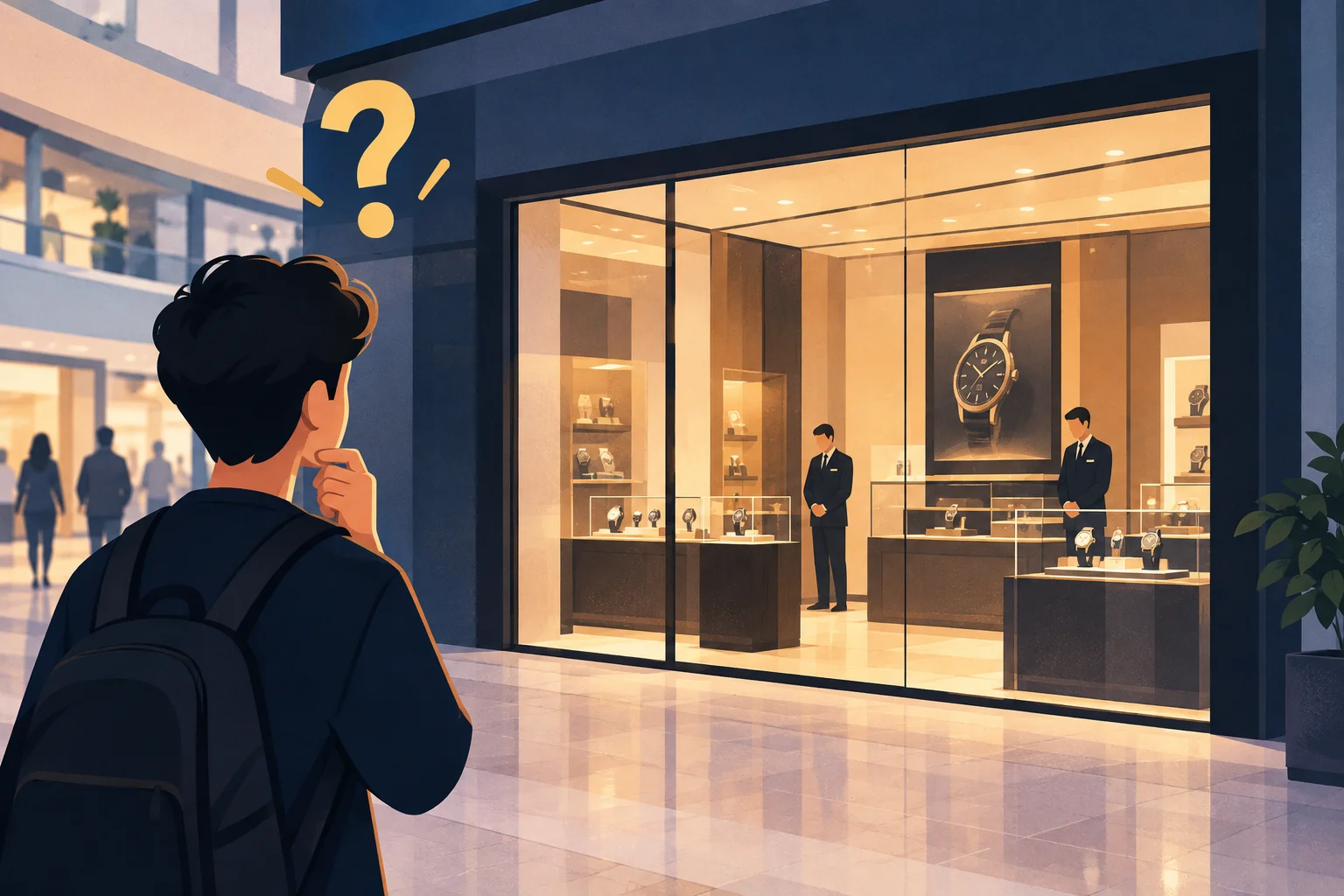
You've probably walked past it. A watch boutique on the top floor of your local mall, lights on, staff standing around, not a single customer in sight. Somehow, it's still open next year.
Here's a question worth sitting with: if a store never seems to have customers, how is it still paying rent? You'd assume a business with no visible customers is bleeding money. But walk past that same store a year later and it's still there. Same quiet showroom, same handful of staff, no closing sale.
So what's actually going on?
The mistake we all make: confusing crowds with cash
Think about it. When you judge whether a business is doing well, you probably look at how busy it seems. A packed clothing store feels successful. An empty one feels like it's struggling. But that instinct is often wrong.
A business doesn't need a crowd. It needs revenue, and revenue depends on just three things: how many people walk in, how many of them actually buy something, and how much they spend per purchase. Retailers have a rough formula for this: Revenue = Footfall × Conversion rate × Average bill value.
A crowded fast-fashion store might get 500 visitors a day, a fifth of them buying something worth ₹1,500–2,000 each. That adds up. But a quiet watch boutique might get just 10 serious visitors a day, with only one or two buying anything. Here's the twist: if that one customer buys a watch worth ₹2–3 lakh, the "empty" store can out-earn the crowded one in a single sale.
Which raises the real question: what kind of business survives on just one or two customers a day?
Some products are built to sell rarely, and expensively
Not every business tries to sell to everyone who walks by. Some are built around selling very little, very expensively, to very few people: a jewelry showroom, a furniture store selling modular kitchens, a premium electronics outlet showing off high-end TVs.
These categories don't need footfall. They need the right footfall.
A jewelry store might see barely any walk-ins on a slow Tuesday, but a single bill of ₹1–5 lakh can cover an entire week's rent and salaries. A luxury watch boutique, where the cheapest piece costs ₹2 lakh, can pull in ₹2–6 lakh in a single day from just one or two sales. Compare that to a grocery store, surviving on margins of a few percent per item, needing constant footfall just to stay afloat.
That's the difference. High-ticket categories like luxury fashion, jewelry, and furniture can run at 30–70% margins, so a single sale contributes far more toward fixed costs like rent than dozens of small ones would. The "empty" store isn't failing, it's playing a different game, one where quality of customer matters more than quantity.
But that's not the only reason these stores survive. Some of them aren't even trying to sell to the person walking past.
The store that sells to you, just not right now
You might wonder: what's the point of a store if people try things on and leave without buying? That's not a failure. For a lot of brands today, that's the plan.
It's called showrooming: visiting a physical store to see or try a product, then buying it later online, sometimes at a better price, sometimes just for convenience. Mattress brands, D2C electronics companies, and digital-first fashion labels increasingly use their mall stores this way. You test the mattress in store, then order it on the app three days later. The till doesn't record that sale, but the store still did its job.
Research backs this up: when online platforms opened offline showrooms, customers' purchases in new categories increased by around 10.7%, even when the actual transaction happened later, online. A store can look empty and still be quietly driving revenue elsewhere in the business, just not at its own counter.
That brings up another piece of the puzzle: why would a mall let a store like this stay, if it isn't ringing up sales on-site?
Why malls protect their quietest tenants
Here's the thing. Malls don't just care about individual stores, they care about the entire property's image, which is why they go out of their way to keep certain low-footfall stores around, especially luxury and premium fashion brands.
Indian mall leases usually combine a base rent, a revenue share (often 6–18% of sales, depending on category), and shared maintenance charges. But prestigious brands often get sweeter deals: longer leases of 9–12 years instead of 3–6, lower base rent, and sometimes rent-free setup periods.
Why give up guaranteed rent for a quiet luxury store? Because it elevates the entire mall, signaling "this is a serious shopping destination," which pulls in other brands and shoppers. Zara and H&M, for instance, have historically paid mostly revenue share with little to no fixed rent in Indian malls, simply because their presence made the property more attractive.
In other words, some stores aren't just tenants. They're marketing for the mall itself.
A similar logic applies to the brand running the store. A quiet flagship works like a giant, walk-in advertisement, telling customers "we're serious, premium," even if most selling happens online. It also quietly reduces online returns, since customers who've tried a product in person rarely send it back. So a store's return on investment isn't always measured in daily sales, but in trust, brand recall, and fewer refunds down the line.
And for one specific category, being quiet isn't just tolerated. It's the entire point.
Why luxury brands actually want an empty store
This might sound backwards, but for luxury retail, a crowded store can actually hurt business.
Luxury brands sell more than a product, they sell exclusivity. A calm, uncrowded boutique signals status, and gives staff the space to spend real time with each customer, often leading to bigger purchases.
A brand selling just 50 handbags a month at ₹2 lakh each still pulls in ₹1 crore in monthly revenue, without ever looking busy. Some boutiques even operate by appointment only, deliberately keeping footfall low. For these brands, a packed store wouldn't look premium, it would look like a discount outlet.
But before this starts to feel like every quiet store has a clever business reason behind it, it's worth being honest: that's not always true.
When "empty" really does mean trouble
Not every quiet store is secretly thriving. Some genuinely are failing.
Indian retail has been shifting from simply opening more stores toward making every existing store profitable, with new stores in some cases expected to break even within 6–12 months or face closure. Malls, too, have grown less patient, "cherry-picking" tenants and pushing out underperformers. And when a mall's biggest crowd-pullers leave, footfall for the whole property can collapse, dragging smaller stores down with it.
There are also less flattering reasons a quiet store might persist: using a loss-making unit as a tax offset, or holding onto a lease as a real-estate bet. In one case, a jewelry store paid roughly ₹3 lakh a month in rent at a struggling Mumbai mall in 2015, and later sold its lease rights for ₹1.2 crore once the mall became popular. The profit came from real estate, not retail.
So while many empty-looking stores have solid economics behind them, some are simply running out the clock.
Conclusion
So, why don't empty stores in malls ever close?
Because "empty" is often the wrong thing to measure. A store's survival depends on what happens after people walk in: how much they spend, how high the margins are, and what role the store plays in the wider business, whether that's driving online sales, building brand trust, or securing a valuable lease.
For high-margin categories like luxury, jewelry, and premium furniture, a handful of the right customers can outperform a crowd of casual browsers. But this isn't a universal rule. Plenty of quiet stores really are struggling, and as Indian retail shifts from "more stores" to "profitable stores," malls are growing less patient with tenants that can't justify their space.
The next time you walk past a suspiciously empty store, don't assume it's failing. Look closer at what it's actually selling, and to whom.
Key Takeaways
- A store's success depends on revenue and margin per sale, not on how crowded it looks. Footfall is just one input, not the goal.
- High-ticket categories like jewelry, luxury fashion, and furniture can survive on a few sales a day thanks to far higher margins and bill values than mass-market retail.
- Many "empty" stores are actually showrooms, driving sales that happen later, online, rather than at the counter.
- Malls often protect low-footfall luxury and premium brands with favorable lease terms, since these stores boost the mall's image and pull in other shoppers.
- Not every quiet store is secretly successful. Genuine underperformance and mall pressure do lead to real closures, especially as Indian retail shifts toward profitability over store count.