Apple Waited Seven Years to Make a Foldable Phone. Was That Smart, or Just Hard?
By Madhvendra
Apple's iPhone Duo arrived seven years after Samsung's first foldable. What that gap reveals about first-mover risk and fast-follower strategy.
What the iPhone Duo's late arrival reveals about the real trade-offs of going first in business
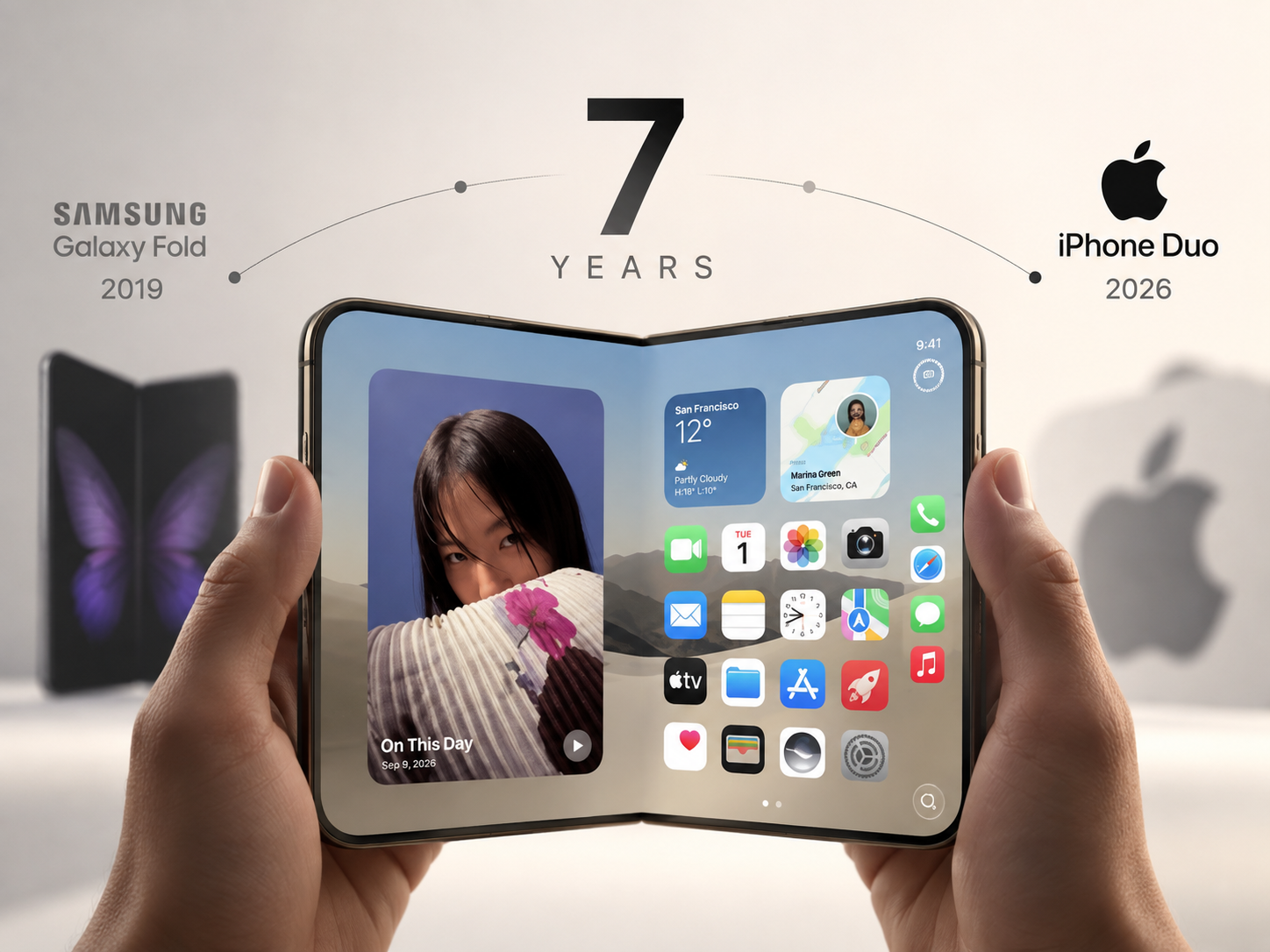
In September 2026, Apple finally unveiled a folding iPhone, nearly seven years after Samsung had already taken that leap. That gap raises a question worth sitting with.
A Phone That Took Seven Years to Show Up
On 9 September 2026, Apple introduced its first-ever foldable phone, the iPhone Duo, priced from $1,999 in the US and ₹2,99,900 in India.
That Indian price lands even as Apple keeps shifting more iPhone assembly to factories in India. It's worth being clear-eyed about what that shift does and doesn't do: assembling phones locally hasn't translated into cheaper iPhones for Indian buyers, because most components are still imported, so customs duties and GST keep landing on the final price regardless of where the phone is put together.
There's a wrinkle, though. Samsung had already launched a folding phone, the Galaxy Fold, back in February 2019.
That's not a small gap. It's roughly seven years and seven months between the two launches.
You might wonder why a company as resourceful as Apple would let a competitor run that far ahead in a brand-new product category. Was Apple deliberately waiting? Or was it simply struggling to build the phone?
To answer that, we need to go back to what actually happened when Samsung went first.
Why Samsung's First Foldable Almost Failed
Think about it from Samsung's side. In 2019, nobody had really made a mainstream folding phone before. There was no playbook to follow.
Samsung announced the original Galaxy Fold in February 2019, then had to delay it after review units started falling apart. Screens flickered, bulged, and in some cases stopped working entirely.
According to Samsung's own announcement at the time, the company identified debris entering the device through exposed hinge areas as one of the causes.
That's an embarrassing, highly public failure for a $2,000 flagship device. Samsung had to redesign the display protection, reinforce weak points, and add hinge caps before it could sell the phone again later that year.
So what happened next? Samsung didn't walk away from foldables. It doubled down.
What Samsung Learned by Going First
The real story starts after that failure. Over the next several years, Samsung kept releasing new folding phones, generation after generation.
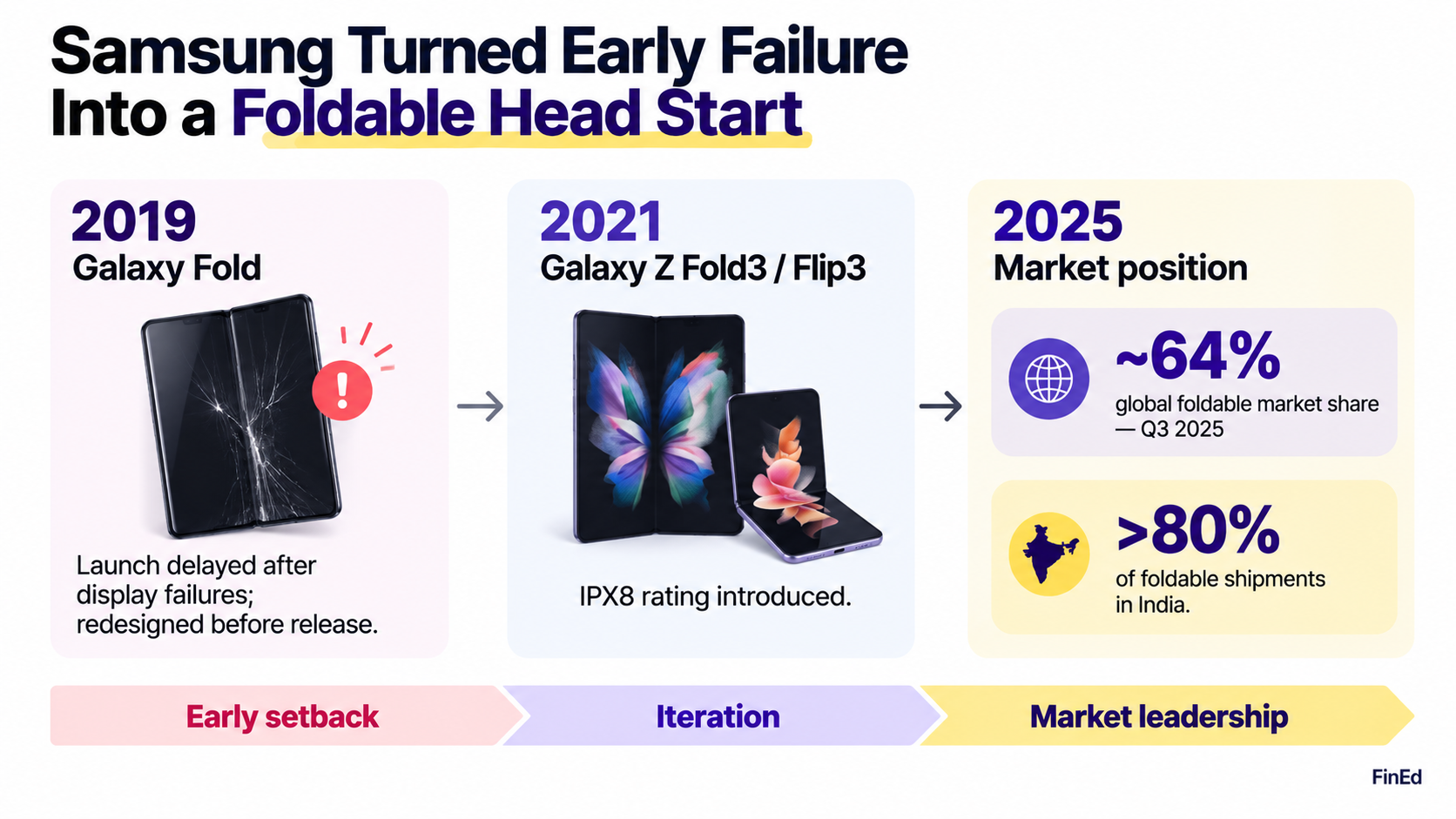
Each version got thinner, lighter, and tougher. By the Galaxy Z Fold3 and Flip3 in 2021, Samsung had even added an IPX8 rating (the top tier of the international Ingress Protection scale for dust and water resistance), something unheard of in the category before.
But the real prize wasn't just better hardware. It was everything Samsung learned along the way: which hinge designs actually held up, how customers used the bigger screen, what price people were willing to pay, and how to train retail staff to sell an unfamiliar product.
That kind of knowledge doesn't show up on a spec sheet, but it's hard for anyone else to copy quickly.
By 2025, this experience had paid off. Counterpoint Research estimated Samsung held around 64% of the global foldable market in Q3 2025, and in India, Samsung's share of foldable shipments was estimated at more than 80%.
Samsung had essentially become the brand people thought of when they thought "foldable phone." These shipment and share figures shift every quarter as new models launch, so treat them as a snapshot rather than a fixed scoreboard. Which brings us to the more interesting question: why didn't Apple want that position too?
Did Apple Wait on Purpose, or Was It Just Hard?
You'd think Apple, with its resources, could have entered the category early and skipped the growing pains altogether. But that's not quite how it played out.
Apple has never publicly said it delayed its foldable phone as a deliberate strategy to let Samsung take the early risks. There's no official statement confirming that.
What we do know is that Apple ran into real technical trouble much later than expected. In April 2026, just months before launch, Reuters reported that Apple had hit engineering-test setbacks that could delay mass production.
That's a telling detail. If foldable technology were easy to master by simply watching Samsung for seven years, Apple shouldn't have run into last-minute production problems at all.
So the honest answer sits somewhere in between. Apple may have benefited from waiting, but it also seems to have genuinely struggled with the engineering, particularly around hinge reliability and reducing the visible crease on the screen.
This is actually a useful moment to step back and look at the bigger business idea hiding inside this whole story.
The Business Idea Behind This: First-Mover vs Fast-Follower
In business, there's a long-running debate about whether it's better to be first into a market or to watch and follow.
Picture two coffee shops opening in a new neighbourhood. The first one grabs the best corner spot and introduces the whole area to good coffee. But it also has to figure out, through trial and error, what the neighbourhood actually wants.
The second shop opens later. It's seen what worked and what didn't. It can skip the mistakes and open with a better menu from day one.
Neither approach guarantees a win. Research on first-mover advantage points to a few things that usually decide who comes out ahead: whether the pioneer has hard-to-copy technology, whether it locked up scarce resources like key suppliers, whether customers become attached to that one brand, and, in tech markets especially, whether the product gets more valuable simply because more people use it.
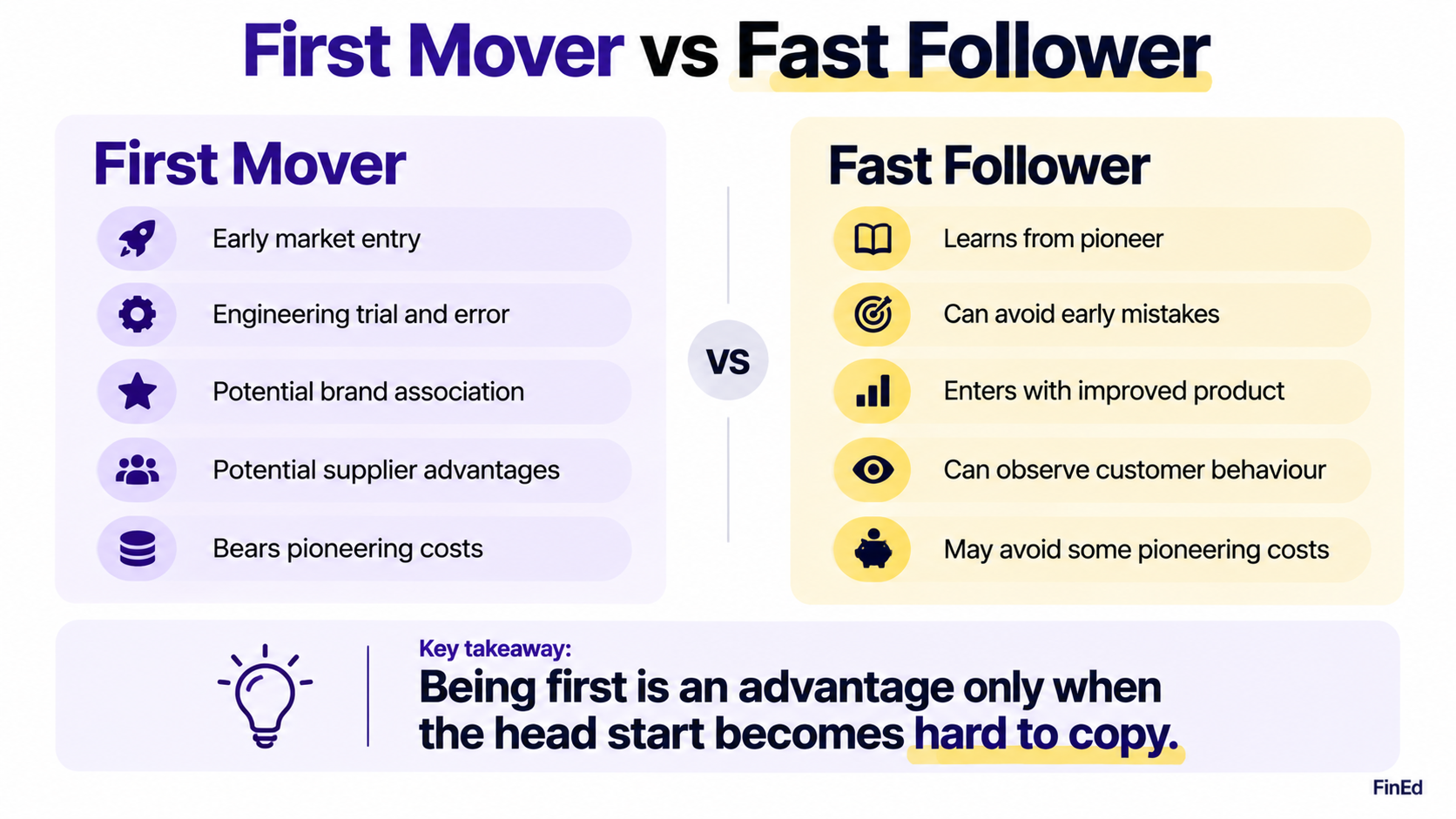
Samsung's case checks a few of these boxes: real engineering know-how, an early brand association with "foldables," and a head start in supplier relationships.
What makes this genuinely uncertain is that foldable phones still aren't a mass-market product. So who's actually positioned to win as the category grows?
So Who Actually Wins, the Pioneer or the Follower?
This is where the numbers matter. Global foldable phone shipments grew from about 1.3 million units in 2019 to 18.2 million in 2025.
That sounds like huge growth. But foldables still made up only about 1.48% of all smartphones sold globally in 2025, as reporting on the category's slow maturity has pointed out.
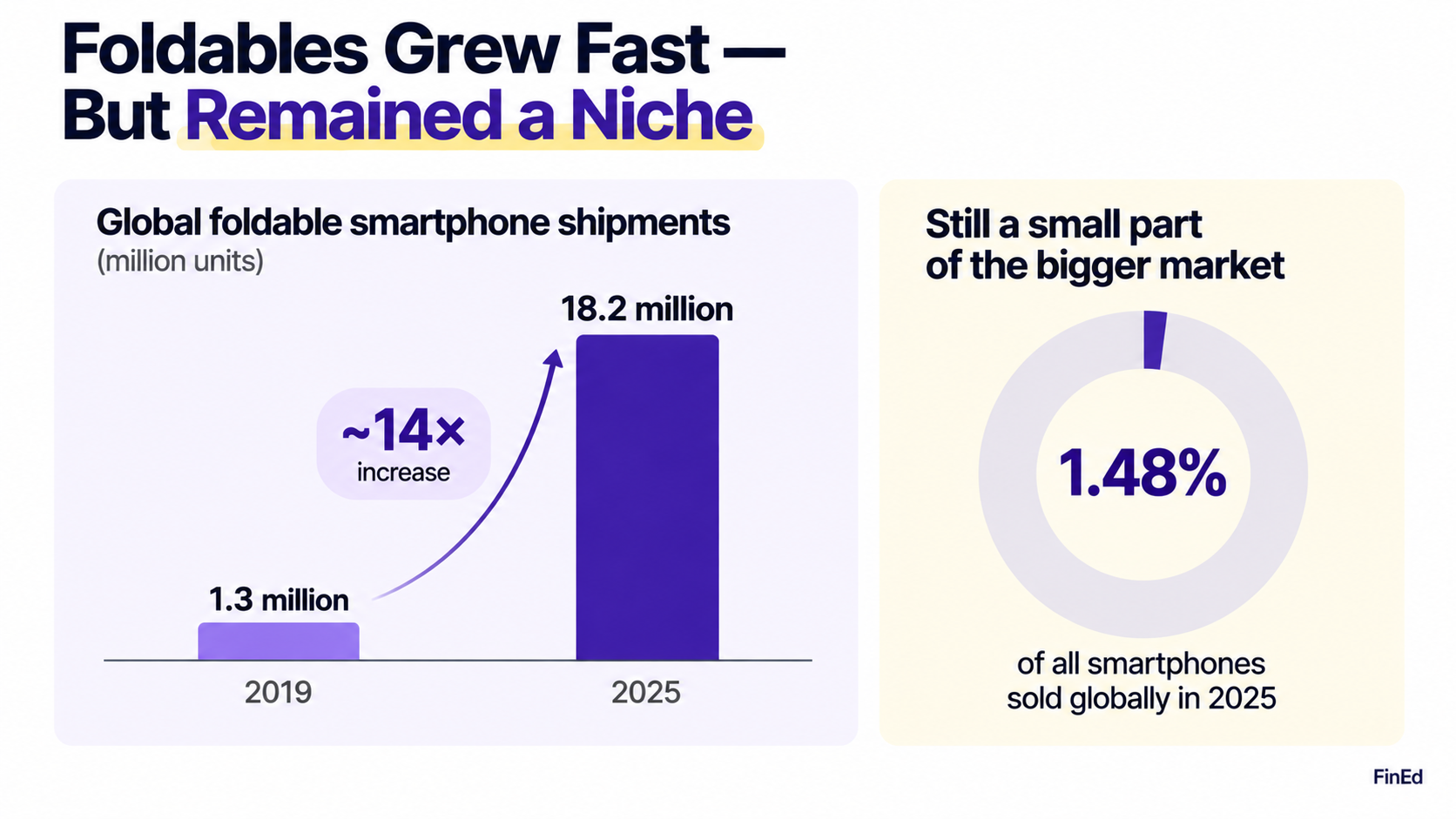
In other words, Samsung spent seven years building leadership in a category that is still, by most measures, a small niche.
That's actually good news for Apple in one sense. It means the market hasn't been "won" yet. There's still real room to grow, and Apple enters with a large, loyal iPhone user base already comfortable paying premium prices.
At the same time, research from the Harvard Business Review has long argued that being first often comes with a hidden cost. Pioneers can gain early sales, but they tend to carry persistently higher costs from all that trial-and-error work, which can quietly eat into their advantage over time.
Apple has pulled off this kind of late entry before. It wasn't the first company to make a smartphone, yet the iPhone reshaped the entire category after Nokia, BlackBerry, and Palm had already staked their claim.
Whether Apple can repeat that trick with foldables is genuinely unknown right now. It depends on whether iPhone Duo actually feels meaningfully better than what Samsung has spent seven years refining, not just later.
The Takeaway
So, was Apple's seven-year wait clever strategy or forced patience? The honest answer is probably both.
Apple almost certainly benefited from Samsung absorbing the category's most painful, most public failures first. But Apple's own 2026 engineering setbacks show that foldable technology was still genuinely difficult, even after seven years of someone else working on it.
The bigger lesson goes beyond phones. Being first can build real, lasting advantages, but only if that head start turns into something hard to copy, like Samsung's hinge expertise or its brand association with foldables. Waiting can work too, but only if the latecomer actually uses that time to build something better, the way Apple once did with the smartphone itself. Simply arriving late isn't a strategy on its own.
Key Takeaways
- Apple launched its first foldable, the iPhone Duo, in September 2026, roughly seven and a half years after Samsung's original Galaxy Fold.
- Samsung's early foldable launch was rocky, with public display failures in 2019 forcing a redesign and delayed release.
- Samsung converted that early struggle into years of accumulated expertise, giving it a commanding share of the global and Indian foldable markets by 2025.
- Apple's own 2026 engineering setbacks suggest its delay wasn't purely strategic patience, foldable technology remained genuinely hard to build.
- Being first only creates a lasting edge when it's backed by hard-to-copy technology, locked-in customers, or scarce resources, otherwise a well-timed follower can still catch up.