· IPO
The Mahanadi Coalfields IPO Explained
An explainer of the Mahanadi Coalfields IPO: price band ₹129-₹136, who gets the money, why margins are slipping and what an 8x P/E really means.
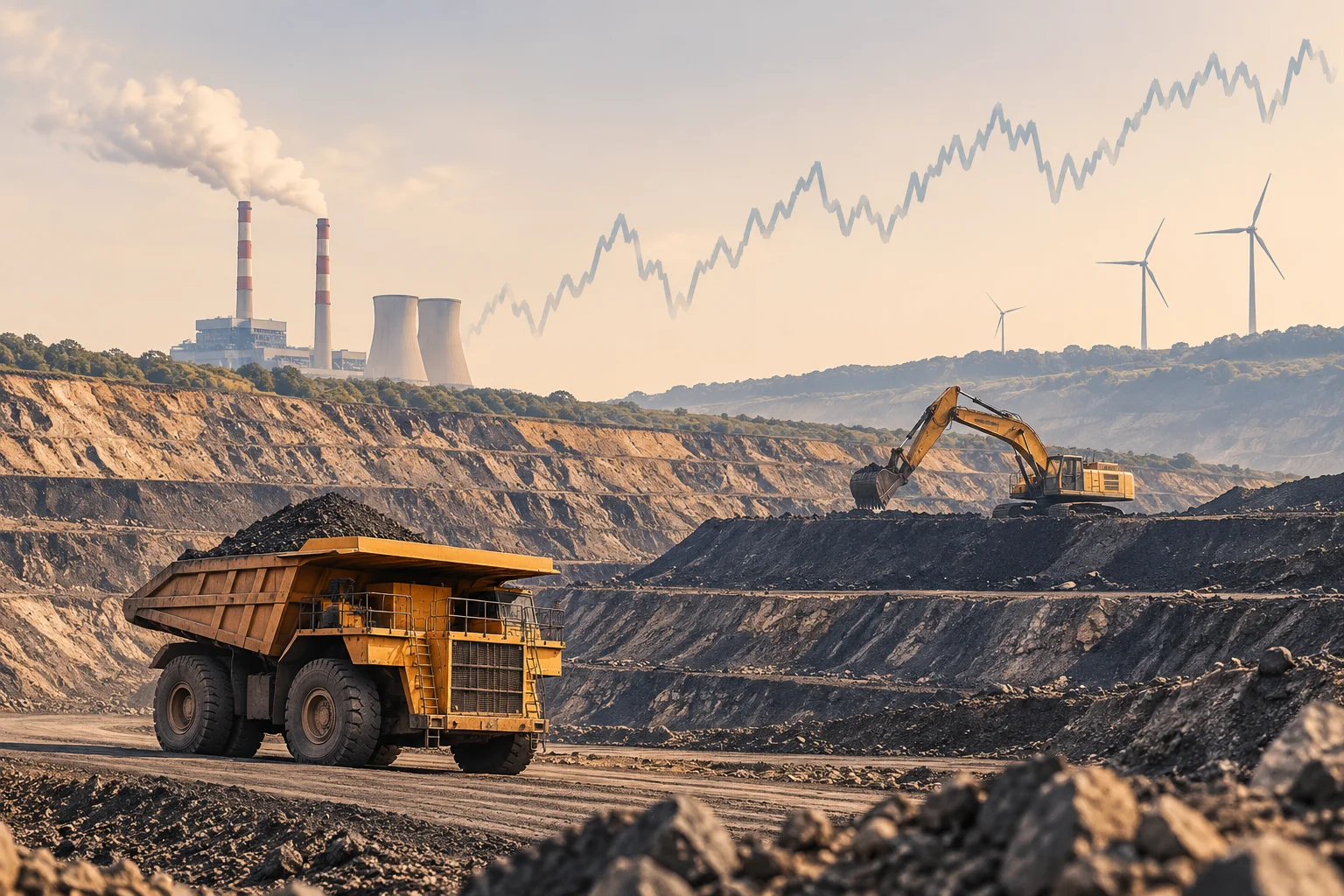
One of Coal India's mining subsidiaries has just opened its share sale to ordinary investors, and the numbers behind it tell an unusual story.
Here is a number to start with. In FY2026, Mahanadi Coalfields (MCL) dug out 218.31 million tonnes of coal. That is about 21% of everything India mines at home.
It also made a profit after tax of ₹10,698 crore, while its total borrowings were just ₹3.16 crore. That is like a household earning a fortune and owing the neighbor the price of a cup of tea.
So why would India list a business like this, at a time when the country is building solar farms at record speed? And what is a fair price for a company that is rich but slowly earning less from its core work? Let's find out.
A Company Behind One-Fifth of India's Coal
Most people have never heard of MCL. It is based in Burla, Odisha, and mines the Talcher and Ib Valley coalfields. Its coal is mainly thermal coal, the kind burned for heat and electricity, not the steel-making kind.
Its customers include state power utilities, private power plants, cement makers and sponge-iron producers. Within Coal India, MCL accounts for roughly 28.4% of the group's production.
But scale is only half the story. Who actually benefits when its shares go on sale?
Who Actually Gets the IPO Money?
You might assume the money goes to MCL to dig more mines. It does not.
This is a pure Offer for Sale (OFS). Coal India is selling up to 10% of MCL's shares, and MCL receives none of the proceeds. If you want the step-by-step journey of a company going public, our guide on how an IPO actually works covers it.
Think of a landlord selling a small share of a building he fully owns. The building does not get the cash. The landlord does, and he still controls the property. Coal India would still hold about 90% of MCL after the sale.
One more detail matters. The cash goes to Coal India, not straight into the Union Budget. The government benefits only indirectly, through its ownership of Coal India.
Now to the real question. What makes MCL so profitable in the first place?
Why Is Its Coal So Cheap to Dig?
The answer is mostly geology. In FY2026, 99.85% of MCL's output came from opencast mines, where coal is dug from the surface instead of through underground tunnels.
Its stripping ratio was 1.50. That means roughly 1.5 cubic metres of soil and rock had to be moved to uncover each ton of coal. Less digging through dirt means lower cost per ton.
An earlier CRISIL industry report, based on FY2025 data, put MCL's production cost at about ₹786 per ton. SECL's was about ₹1,150 and NCL's about ₹1,267, which are other Coal India subsidiaries. These are FY2025 figures, not the latest.
So MCL digs cheaply and earns a lot. But here is where it gets interesting. Earning a lot is not the same as earning more.
Strong Profits, Slipping Margins
Between FY2024 and FY2026, MCL's profit after tax slipped from ₹11,842 crore to ₹10,698 crore. Revenue also edged down, from ₹31,634 crore to ₹30,550 crore.
The sharper clue sits in a measure called operating EBITDA. It is simply the profit from running the business, before interest, tax and accounting charges like depreciation, and without counting other income.
Imagine a shop that earns money by selling clothes and also earns interest on its fixed deposits. Operating EBITDA looks only at the clothes.
MCL's operating EBITDA margin fell from 46.41% to 41.69% over those two years. In rupees, operating EBITDA dropped from ₹14,681 crore to ₹12,735 crore.
Headline EBITDA tells a rosier tale, because it includes ₹3,349.69 crore of other income. That is about 20.8% of the total. Part of it relates to interest on old income-tax refunds, which may not repeat.
The latest half-year adds a twist. From April to September 2026, MCL produced less coal (87.54 million tonnes against 96.53 a year earlier) but sold more (111.24 against 103.05). How is that possible?
It sold from its stockpile. Its raw coal stock fell from 43.76 to 20.08 million tonnes over those six months. That boosts cash for a while, but a shop cannot keep selling from the godown forever.
Which raises a bigger question. Will anyone need this much coal in the future?
Smaller Share, Bigger Market
At first glance, listing a coal company while building renewables looks like a contradiction. It is not, and the reason is simple arithmetic.
The International Energy Agency expects India's electricity demand to grow about 6.4% a year until 2030. Coal-fired generation is expected to grow around 2.5% a year, even as coal's share of generation falls from about 70% to 60%.
Think of a pizza that keeps getting bigger. Coal's slice shrinks, yet the slice can still weigh more than before.
MCL also has its own targets. Management has spoken of 220 million tonnes in FY2027 and 300 million tonnes by FY2030. These are goals, not guaranteed sales.
The long-term risk is real, though. Storage and cheaper renewable power could cut coal's role faster than forecasts suggest. Nobody can say exactly when.
So what does all this mean for the price?
What Price Does the Market Ask For?
The price band is ₹129 to ₹136 per share. Multiplied by all of MCL's shares, that values the company at roughly ₹85,377 crore to ₹90,010 crore.
Divide that by earnings and you get the P/E ratio, the price you pay for each rupee of yearly profit. At the band's ends, MCL's P/E works out to about 8.00 and 8.43 times FY2026 earnings per share. If P/E is new to you, this explainer on the P/E ratio will help.
A brokerage note put Coal India at about 7.76 times earnings in mid-November, so MCL is priced slightly higher. That is a dated brokerage figure, not a live market multiple.
The dividend angle draws attention too. MCL paid ₹7,650 crore in dividends during FY2026. Against the upper-band value, that is roughly 8.5%. Another measure, which includes the final dividend proposed for FY2026, gives about 9.3%.
These are past numbers, not promises. Dividends are decided by the board each year, and they depend on future profits.
A low P/E and a rich dividend can look like a bargain. But the margin slide, a concentrated customer base (the top five buyers gave 41.09% of FY2026 operating revenue) and long-term coal risk may be exactly why the price is modest.
Conclusion
So what is a coal cash machine worth when its margins are softening? There is no single answer, and this article does not give one.
The facts are these. MCL is large, cheap to run and nearly debt-free. It is also earning a smaller share of each rupee of coal sold, and part of its recent cash flow came from stockpiles and one-off items.
The bigger lesson is about reading any IPO. Look past the headline profit. Ask who gets the money, what drives the margin, and what the price already assumes.
This is education, not investment advice. As this was written, bidding was open until 23 November 2026, the final price was yet to be set, and listing was expected on 27 November.
Key Takeaways
- In an Offer for Sale, the selling shareholder gets the money. Here, Coal India sells about 10% of MCL, and MCL itself receives nothing.
- Look at operating EBITDA, not just headline profit. MCL's operating margin fell from 46.41% to 41.69% in two years, and other income flatters the headline.
- A falling share of a growing market can still mean more tonnes. India's coal share may fall while its total use rises.
- A low P/E and high past dividend yield do not make an IPO a bargain. Ask why the price is where it is.
- Check the date before trusting any IPO number. Final price, allotment and listing are decided after the offer closes.